

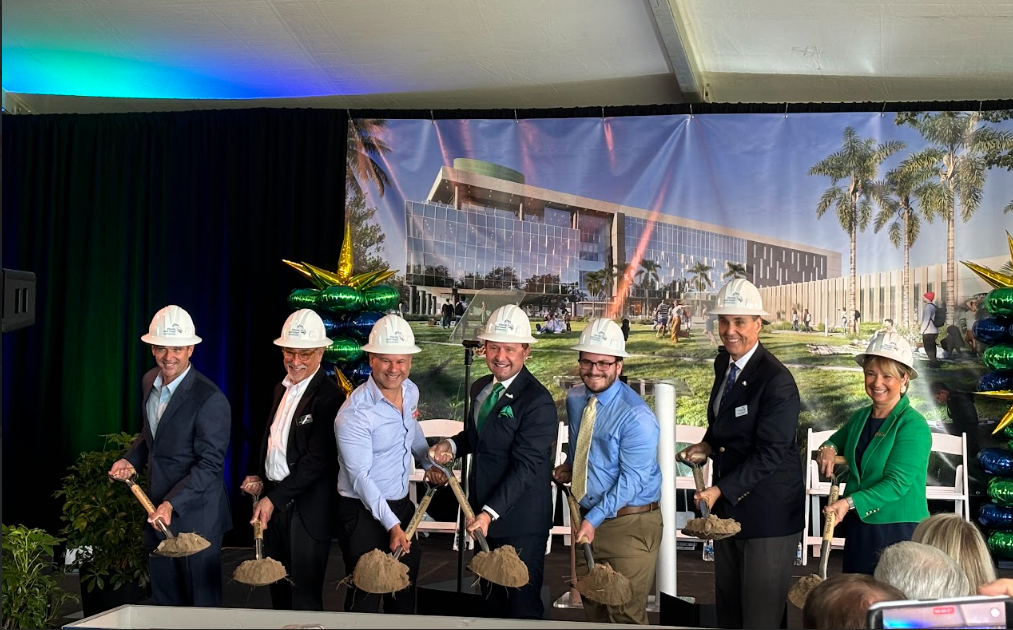













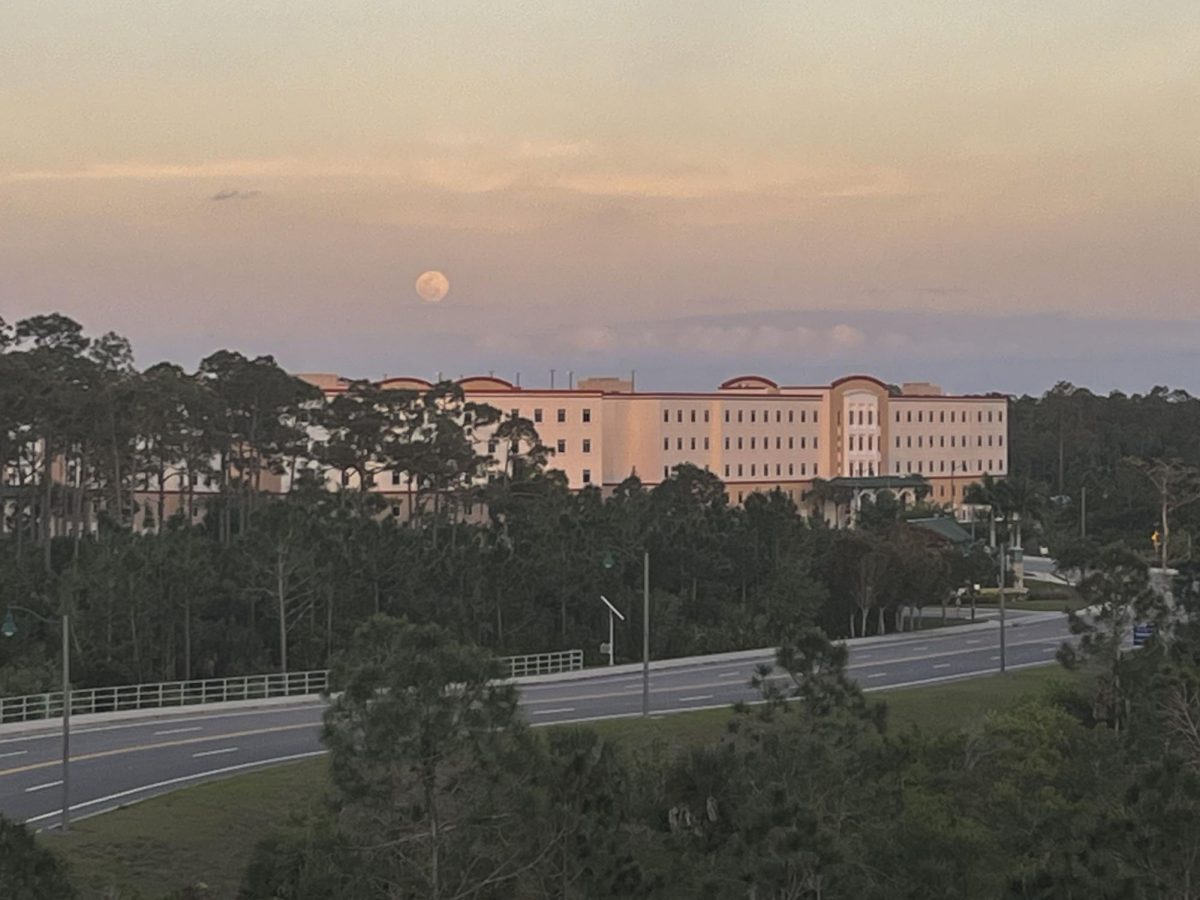


FGCU continues to invest in healthcare through the groundbreaking of its newest building Marieb Hall South, formerly known as Academic Building 10. The ceremony to celebrate this new building was held on Wednesday, April 15.
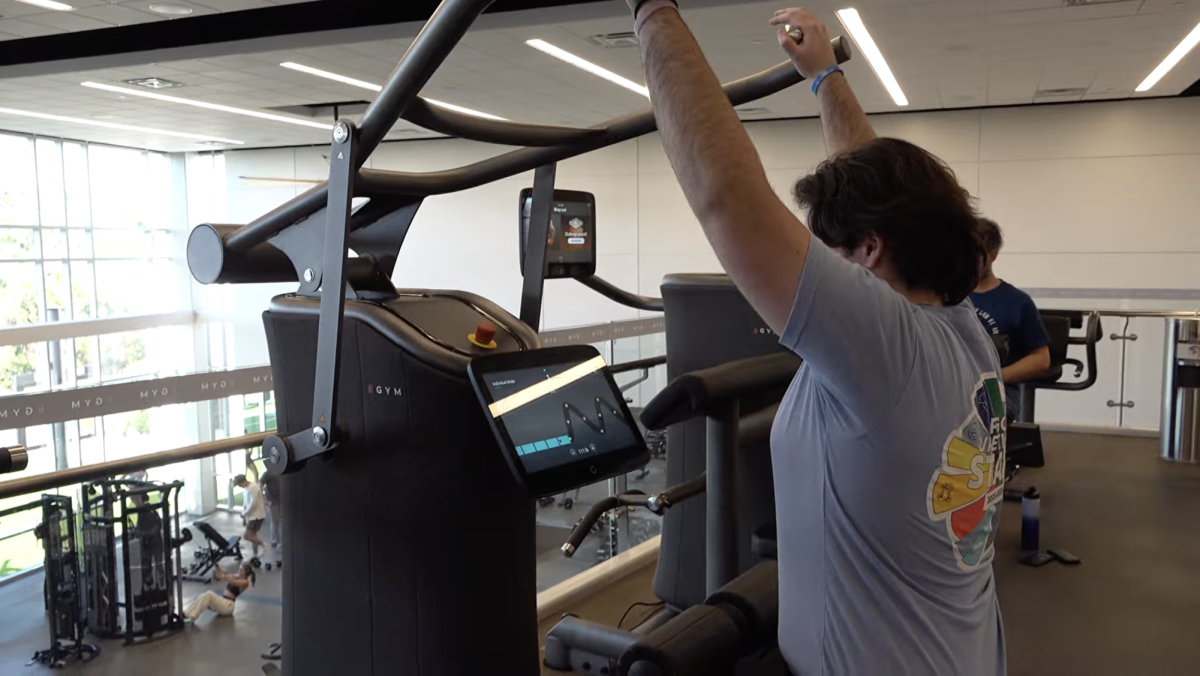
This facility is focused on providing majors in the health sciences with hands-on experience through emerging technologies to equip them with the skills necessary for the job.
“I really appreciate how FGCU is investing in the healthcare profession and in these students’ future education,” Occupational Therapy graduate student Kristen Carney said. “I think technology is super important for any major but specifically for healthcare, because we need to stay on top of the cutting edge technology, because it directly impacts patient outcomes and can improve healing.”
One of the technologies implemented in this building is the Proto Dr. Hologram, which provides holographic 3-D imaging. Carney uses this on her project to teach American Sign Language.
Space to work
Marieb Hall South will have 32 to 39,000 square feet of innovation space on its third floor and the whole building will give students access to open space similar to Academic Building 9, now known as Antonier Hall.
Graduate students such as Carney stay after class often to work on projects and spaces are crowded in the existing health sciences building. Marieb College staff wanted to find a way to meet the growing demand for healthcare workers as well as find them a large, dedicated space to learn and work.
“We face growing shortages in primary care, behavioral health, while health care itself continues to evolve, driven by data, artificial intelligence and emerging technologies,” Marieb College Dean Shawn Felton said. “Without the space to grow and innovate, we cannot fully meet the needs of our students or our community.”
Marieb Hall South offers more opportunities for faculty to work comfortably. With four floors, this will be the largest building on campus and more operational for all disciplinary areas of FGCU’s healthcare programs as well as GIDDI, CAPS, Student Health Services and institute on positive aging.
“AB10 is more than a building,” Felton said. “It is a catalyst for innovation, a center for collaboration and a foundation for healthier communities.”
Honoring a legacy
FGCU received support and partnership on this building from Governor Ron Desantis, the Florida legislature and House as well as the Elaine Nicpon Marieb Foundation after its $22 million gift dedicated to the success of this program last summer, which was the largest donation in FGCU history.
“We wanted to make sure that her legacy was instilled with this building and having the faculty, the students be able to have the best technology in order to see how they could enhance their education so that they’re workforce ready,” Marieb Foundation Trustee Libby McHugh said.
Due to this gift and the preservation of Marieb’s legacy, the decision was made to name Academic Building 10 in her honor again. This change caused the existing Marieb Hall on campus to be renamed Marieb Hall North.
“Every morning, when I walk off the elevator, I see Dr. Marieb’s photo. I am reminded of our responsibility to strive for excellence in educating future healthcare professionals. Her legacy lives in everything we do, and we are deeply grateful for her faith in us,” Felton said.
Becoming job ready
The enrollment in FGCU’S Marieb college doubled in the last five years and the number of degrees awarded has increased by 61%. To continue this streak, the purpose of this gift was dedicated to seeing the students succeed in this prestigious field.
“The real effort in terms of creating a legacy is doing something that’s innovative, doing something that’s new,” Marieb Foundation Trustee Martin Wasmer said. “Our goal is to see if we can apply innovation to improve the process of getting more students, more higher and better qualified students through the education process.”
The ultimate shared goal is for students to be prepared to enter a hospital setting, be job ready and care for Southwest Florida’s aging population. Training these students at the highest level is the way they believe they will reach that standard.
“FGCU graduates, as you can see, are job ready, highly skilled and deeply committed to serving this region at organizations like Lee Health,” Larry Antonucci, CEO of Lee Health and Chair of the FGCU Board of Trustees said. “We see every day the value FGCU alumni bring to patient care and to our workforce. This expansion strengthens that pipeline, allowing FGCU to scale its impact and ultimately improve the quality and care throughout southwest Florida.”
Director of Interprofessional Simulation and Emerging Technology, Dr. Joseph Buhain is excited for this building since this is what he specializes in. He most looks forward to students being able to utilize this technology in an experiential way.
“Simulation is the bridge between academia and real clinical practice,” Buhain said. “I want their true experience in a clinical setting to be something they can feel comfortable with.”
Students in the program currently gain experience by working with a facilitator who acts as their patient in a given situation. Now, students can interact with AI as a simulator for these kinds of experiences instead.
“As we continue to grow with technology, medical care is going to be changing as well,” Buhain said. “The dream of creating something that clinicians can use or can learn from within the 24th and 25th centuries is what we are designing and creating for the students of FGCU.”
The project is planned to be constructed by RG Architects and Skanska and is projected to be completed in Spring 2029.
“I think this is a true testament to FGCU being a regional comprehensive institution serving our region and we’re here to produce more healthcare workers because the population growth is here and we’ve got to keep up with that,” Felton said.