

























One of the great outcomes of American heterogeneity is the introduction to Asian cuisine.
A greasy-bottomed box of pork fried rice from your local Chinese takeout, a hearty bowl of Vietnamese pho paired with a banh mi or a Japanese roll of vinegared rice, fresh fish and nori. We all know it, we all love it.
Perhaps one of the more underappreciated contributions hails from the southeast Asian nation of Thailand. Known for their love of all things spicy, a western palate may shy away from giving it a shot. Thai food achieves a harmonious balance between flavor profiles like spice from chilis, sour from lime juice, salt from fish stock and sweet from palm sugar.
My search for this experience brings me to Siam Hut, a restaurant tucked away in an unassuming Cape Coral shopping plaza.
As I walk through the restaurant’s doors, I’m brought back to the 80’s. Wood paneled walls and texture-weaved carpet enclose about 20 tables and booths, sporting vibrant and patterned tablecloths. A dividing wall in the restaurant boasts traditional Thai statues of musicians, turtles and a gold, diamond plated makuta. Most impressive was the presence of two tohs, low tables used for eating while seated on the floor, which is tradition in northern Thailand.
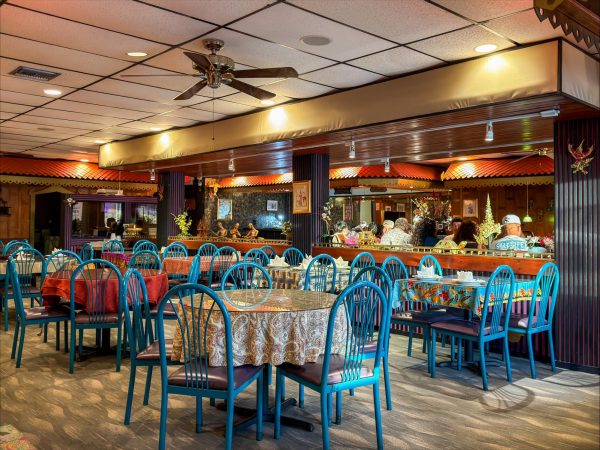
The 80’s ambience isn’t manufactured, as most of the décor and interior has stayed the same since the restaurant’s opening in 1984. Their 42-year tenure makes it the oldest restaurant in Cape Coral and like the décor, their menu hasn’t changed.
To start the meal, it’s easy to opt for fan favorites such as spring rolls or Gyoza. However, I’m here for an authentic taste of Thailand and instead go with satay and tao hoo tod.
If you ever find yourself walking the streets of Bangkok, you’re likely to see a cart selling satay. The dish is essentially long, thin strips of chicken marinated in a coconut milk and spice blend on a skewer that’s grilled over charcoal. The marinade gives the meat a dark yellow color and cooking on the grill adds those iconic grill marks. Served with a cucumber salad and peanut sauce, this street treat acts as a perfect appetizer to ease the palate into Thai flavors.
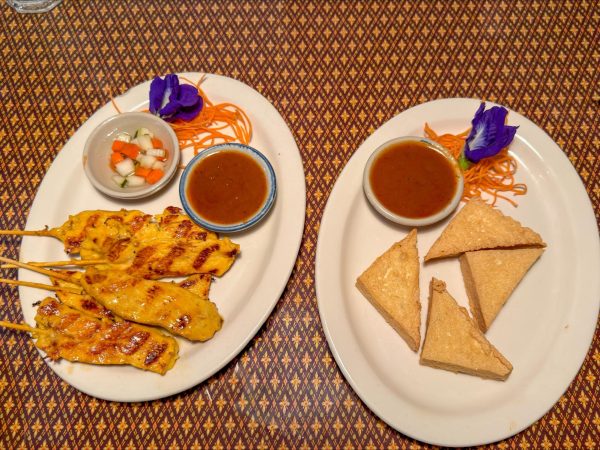
Our second appetizer is a fried tofu cake called tao hoo tod, another popular street food in Thailand. This crispy fried bean curd has a spongy interior signature to tofu. The cake itself doesn’t have much flavor, since it’s meant to be a vessel for the accompanying dipping sauce. In this case, more peanut sauce.
For someone who prefers savory or spicy over sweet, I thoroughly enjoyed the peanut sauce. It was tough for me to get past the texture of the tofu, which I’m sure is an acquired taste but an overall solid start to the meal.
Before our entrees arrive, a small cup of soup is placed on the table. Tom yum goong is our soup of choice and its spicy aroma immediately hits the nose. I like to think I have a high spice tolerance but the soup, ordered at medium spice level, admittedly provoked a coughing fit.
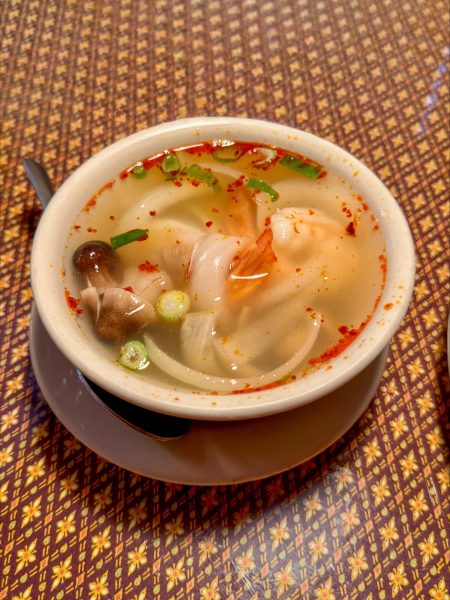
Shrimp, mushrooms and onion bathe in a savory fish stock, seasoned with kaffir lime leaves and lemon grass. The salty fish stock and fiery chili paste act as an equalizer to the bitterness of the lemon grass and the tang from the lime. Small, but meaty shrimp and julienned onions absorb the variety of flavors to make for an exquisite bite.
I ordered the Duck Royal and Crispy Pork Trio as the night’s main event. Roasted duck is a staple in Thai cuisine and for good reason.
Siam Hut’s Duck Royal is a roasted duck finished in a red curry sauce with tomatoes and pineapple. The curry, similar to the satay marinade, is a sweet and spicy sauce consisting of coconut milk, fish stock, lime and more. The duck’s crispy skin provides a savory aspect to the dish, courtesy of a Chinese five-spice blend and garlic soy sauce marinade. Simmering the duck in the curry before serving gives it that “fall off the bone” tenderness it’s famous for. Bonus points for being served on a duck-shaped piece of tinfoil.
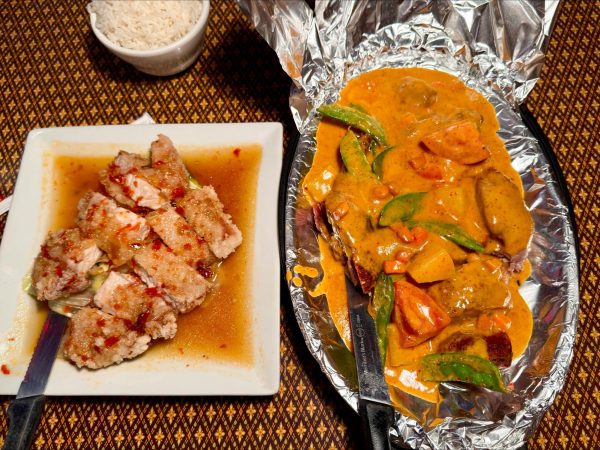
The “trio” in the name “Crispy Pork Trio” derives from the three-flavor sauce the pork is sauteed in. The sauce is sweet, spicy and sour, hence the name. Fish sauce, palm sugar, tamarind and chilis give the sauce the bulk of its flavor profiles. A light cornstarch breading, similar to tempura, coats the pork before being fried. Fried until crispy, it’s then sauteed in the sauce, allowing the meat to soak up the triple-threat of flavors. Placed over a bed of steamed vegetables and next to a bowl of white rice, this dish highlights the distinctiveness of Thai flavors.
My taste for the Thai culinary experience has been satiated, and we slump in our booths waiting for boxes to be dropped off for our leftovers. I often dream of sitting on the streets of Chiang Mai, tuk tuks weaving through traffic honking their horns while I enjoy questionably sanitary Thai street food. Until then, Siam Hut is where I’ll be to satisfy my gastronomic cravings.